





Table of Contents
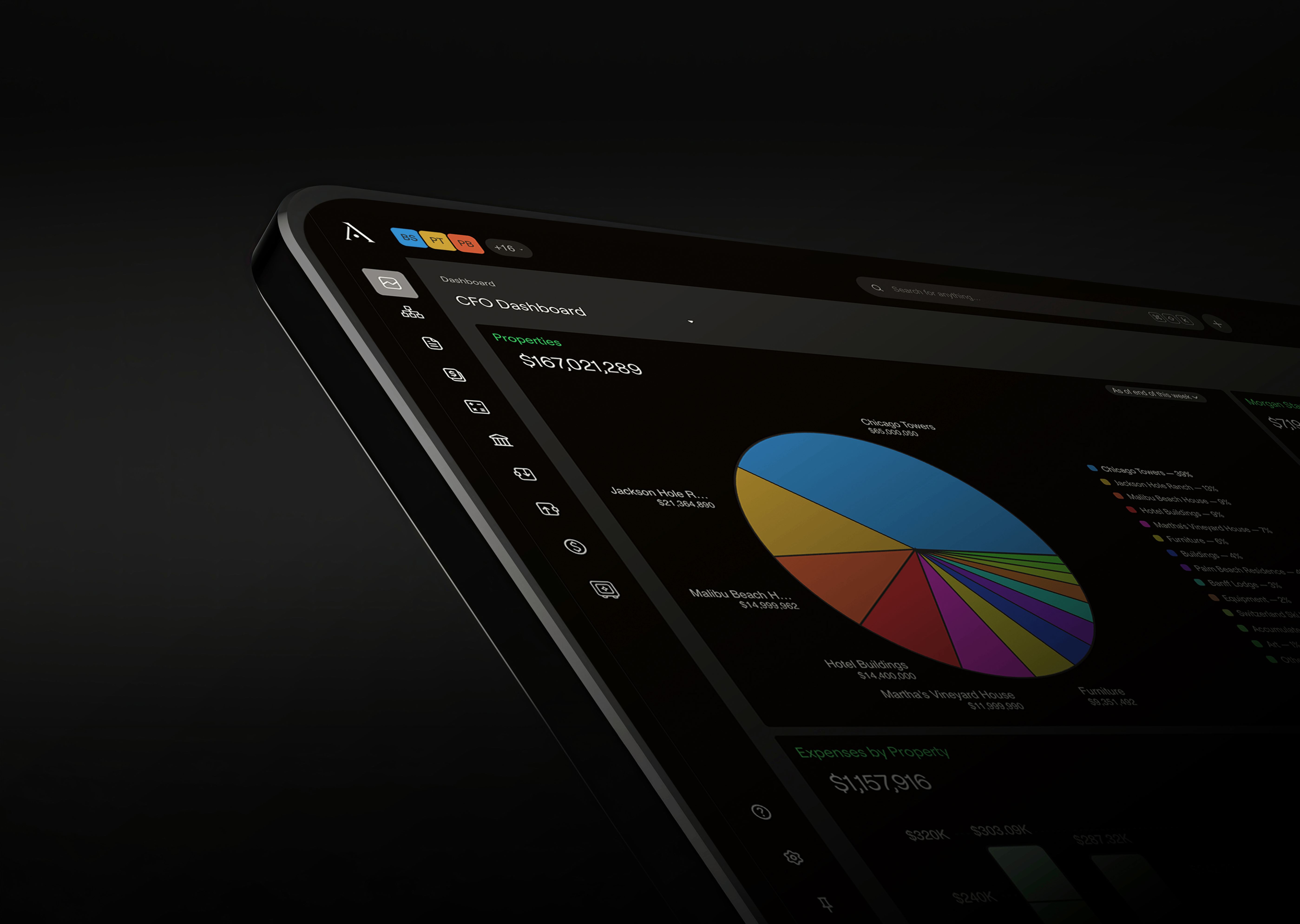
Unified accounting, investment tracking, entity management, and reporting—purpose-built for family offices.
The best partnership accounting software for a family office keeps capital accounts, allocations, and the general ledger in one system. Asseta does this for family offices. This guide compares it with six other options.
Most family offices own pieces of many partnerships. Some are family investment partnerships. Others are LLCs, holding structures, or outside funds. Each one has partners, capital accounts, and allocations that change over time.
In many offices, this work lives in a spreadsheet beside the ledger. Someone updates it every period, and someone else reconciles it to the books. Errors are easy to make and hard to find.
This guide compares seven ways to handle partnership accounting. Asseta is ours, and it goes first. For each option, we describe what it is, who it fits, and where its limits are.
The seven options at a glance
| Option | Best for | Approach |
|---|---|---|
| Asseta | Family offices that want partnership accounting inside a multi-entity ledger | Purpose-built suite for family offices |
| Sage Intacct | Offices with corporate structures and in-house Intacct skills | Generalist ledger with allocation features |
| Asset Vantage | Offices that want ledger, partnership accounting, and reporting from one vendor | Integrated platform |
| Archway | Offices that want software and outsourced accounting together | Platform plus managed services |
| Northern Trust | Offices that want a bank to run partnership accounting for them | Technology-enabled service |
| Excel and QuickBooks | Offices with one or two simple partnerships | Manual baseline, not a partnership product |
| FundCount | Offices with fund-style partnerships and complex tax allocations | Partnership and portfolio accounting with a ledger |
What is partnership accounting?
Partnership accounting tracks who owns what in a partnership and how the economics are shared. It records each partner's contributions, distributions, and share of income and loss. It produces a capital account for every partner and keeps those accounts in agreement with the partnership's books.
In a family office, the partners are often family members, trusts, and holding companies. Ownership changes as the family grows, and the records must show what ownership looked like at each point in time.
What the software must do
Use this list to test any option. It reflects the work a family office does in every period.
- Capital accounts for every partner. Contributions, distributions, and allocated income should roll forward automatically.
- Ownership changes with a history. Transfers and new partners should be dated, and past cap tables should stay available.
- Automatic, accurate allocations. Income, expenses, and gains should allocate by the rules of the structure, without manual formulas.
- One set of books. Partnership entries should post to the general ledger. No second system should need to be reconciled.
- Multi-entity awareness. A family partnership is usually owned by other family entities. The ledger should reflect that.
- Statements the partners can read. Capital account statements should come from the system, not from a separate document.
1. Asseta
Asseta is The Intelligent Family Office Suite®. Partnership Accounting is part of the suite, so it sits in the same system as the general ledger, not beside it. It is built for trusts, LLCs, and tiered partnerships, however complex the ownership structure.
The product covers the core work of a partnership in each period:
- Capital accounts. Every partner in every entity has a precise, current capital account.
- Automated allocations. Income, expenses, and gains allocate by ownership percentage, without manual formulas.
- Capital calls and distributions. Teams issue, track, and record calls and distributions across all partners.
- Ownership changes. Transfers, admissions, and redemptions are handled with full history preserved.
- Partner statements. Each partner gets a clear statement of capital, activity, and returns.
- Tax-ready records. Allocation detail is organized and exportable at year end.
Because the ledger is built for many entities, a partnership can sit inside a larger family structure. Transactions between entities book on both sides at once, so the books stay in balance.
One limit to state plainly: Asseta allocates by ownership percentage. Offices that need waterfalls, preferred returns, or special tax allocations should ask for a demo against their own agreements.
Best for: single and multi family offices that want partnership accounting, the ledger, and reporting in one suite built for family offices.
2. Sage Intacct
Sage Intacct is a mid-market cloud ledger with strong multi-entity features and a large partner network. Many offices already know it, and it handles consolidation well.
Sage lists allocations management and fund accounting among its features for family offices. Partnership accounting, including partner capital accounts, is typically set up through implementation partners and depends on how the system is configured. Some offices keep capital accounts in a companion spreadsheet that the team reconciles by hand. Ask any consultant to show a capital account roll-forward in the live system before you commit.
Best for: offices with corporate-heavy structures and in-house Intacct expertise.
3. Asset Vantage
Asset Vantage was founded in 2011 and combines an automated general ledger, partnership accounting, performance reporting, data aggregation, and bill pay in one platform. It supports multiple currencies and tax jurisdictions.
The integrated approach means partnership records and consolidated statements share one source. The platform is built with accountants and investment staff in mind, so offices should confirm that the people who will use it every day are comfortable with it.
Best for: offices that want partnership accounting, the ledger, and performance reporting from one vendor.
4. Archway
Archway grew out of SEI's Family Office Services business and became an independent company in 2025. Its platform includes a general ledger, partnership accounting, investment data aggregation, and reporting. Offices can run it in house or have Archway's team operate it for them.
It has a long record with large offices. It is also a substantial platform with a services model, so offices should scope the implementation, the learning curve, and the total cost against their needs.
Best for: large offices that want software and outsourced accounting from one provider.
5. Northern Trust
Northern Trust offers technology-enabled partnership accounting and general ledger services to global family offices. Its partnership service includes automated income allocation and reallocation, with specific allocations for profit and loss, contributions, distributions, and deferred capital.
This is a service relationship with a bank, not a self-managed software product. That suits offices that prefer to hand off the work. It also means the office relies on the provider's process and timeline.
Best for: offices that want an institution to run partnership accounting and hold the records.
6. The baseline: Excel and QuickBooks
Most offices start here. A spreadsheet tracks partner balances, and QuickBooks holds the entity books. For one or two simple partnerships, this can work.
The problems grow with the structure. Each partner change means a manual update. Allocations depend on formulas that only one person understands. The spreadsheet must be reconciled to the books every period, and errors can pass unnoticed for months. Past a few partnerships, the manual work costs more than purpose-built software.
Best for: new offices with one or two simple partnerships.
7. FundCount
FundCount comes from the fund administration world. Its partnership engine handles capital accounts, waterfalls, partial transfers, side pockets, series LLCs, and tax allocations, and it posts entries to the same ledger that holds the portfolio accounting.
That depth suits offices with fund-style structures. Offices should also check how well the platform handles the household side of a family office, including personal expenses, bill pay workflows, and the reports a principal reads.
Best for: offices with fund-style partnerships, waterfalls, and complex tax allocations.
How to choose
Start with your partnerships. List each one, its partners, and the rules in its agreement. A family investment partnership with a pro rata split has different needs from a structure with preferred returns and special allocations.
Then test each option on your own data. Ask every vendor to set up one of your real partnerships and show the capital account roll-forward. Check that the entries reach the general ledger without a second system. Call references from offices with a similar structure.
Finally, weigh the daily user. The best system on paper fails if the team will not use it. Choose software that the people closest to the books can run with confidence.
Frequently asked questions
What is partnership accounting for a family office?
It tracks each partner's contributions, distributions, and share of income in a family partnership. It produces a capital account for every partner and keeps those accounts in agreement with the books.
Can a general ledger handle capital accounts?
A generalist ledger can record the entries, but it often lacks native partner and allocation logic. Many offices keep a spreadsheet beside it. A purpose-built system holds both in one place.
Is Excel enough for partnership accounting?
For one or two simple partnerships, it can be. As partners, transfers, and allocation rules grow, manual updates and reconciliation create risk.
What should I ask a vendor in a demo?
Ask the vendor to set up one of your real partnerships. Ask to see a capital account roll-forward, a mid-year ownership change, and the resulting ledger entries.
Which software is best for partnership accounting in a family office?
It depends on your structure. Asseta fits offices that want partnership accounting inside a multi-entity ledger. Offices with fund-style waterfalls may also evaluate FundCount.
If partnership accounting still lives in a spreadsheet, bring one partnership agreement to a demo.
We will show you the ownership changes, the capital accounts, and the partner statements inside the ledger.
Lead with Legacy.